

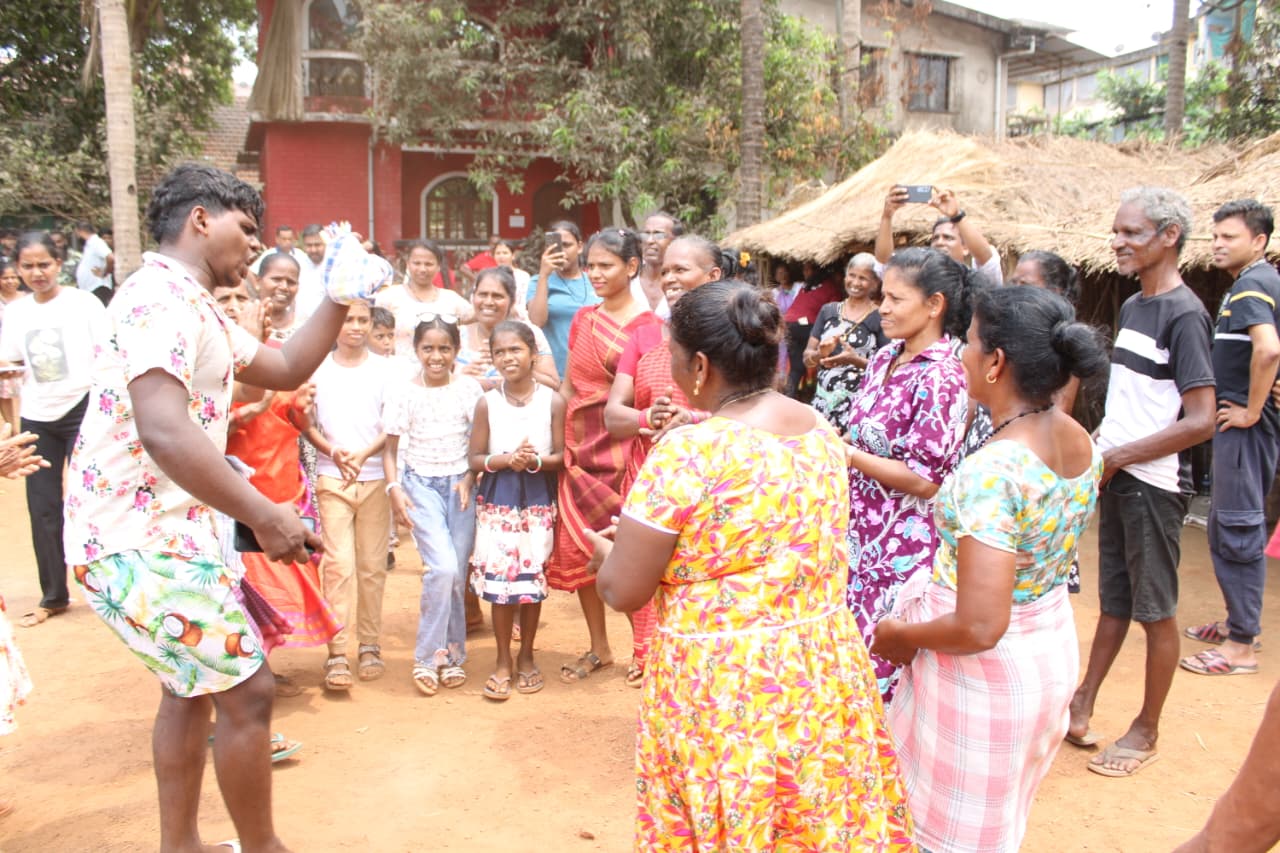
In an age defined by speed, convenience, and constant forward motion, Tilamol Parish chose a different path on Sunday 19th April 2026—one that gently turned back time. Through Randne Pol, a thoughtfully curated cultural event, the village rediscovered a way of life that once defined Goan identity but has slowly receded from daily practice. More than a festival or competition, Randne Pol emerged as a powerful act of cultural remembrance. It was not about displaying tradition behind glass, but about inhabiting it once again. For a full day, Tilamol did not merely recall its past—it lived it.
At the heart of the event were twelve wards of the parish, each taking on the role of both participant and custodian of heritage. In the days leading up to April 19, and often late into the night, community members worked collectively to recreate traditional village kitchens known as randne pol. These were not symbolic installations. Each kitchen was built from the ground up using mud, stones, and firewood, reflecting the materials and methods that sustained Goan households for generations.
The preparation itself became an act of storytelling. Older members guided the younger ones, demonstrating how to mould mud stoves by hand, how to position firewood for steady heat, and how to arrange utensils in ways that balanced function and familiarity. Knowledge that once flowed naturally within households was, for a brief moment, returned to its rightful place—shared, practiced, and valued.
By dawn, Tilamol was already awake with anticipation. At exactly 7 a.m., the kitchens came alive. But unlike modern kitchens, there were no gas burners humming quietly in the background, no mixers slicing through ingredients in seconds. Instead, there was the rhythmic scraping of coconut, the steady grinding of spices on stone, and the crackle of firewood catching flame. Every step required patience. Every movement demanded attention. Cooking was no longer a task to be completed quickly, but a process to be experienced fully.
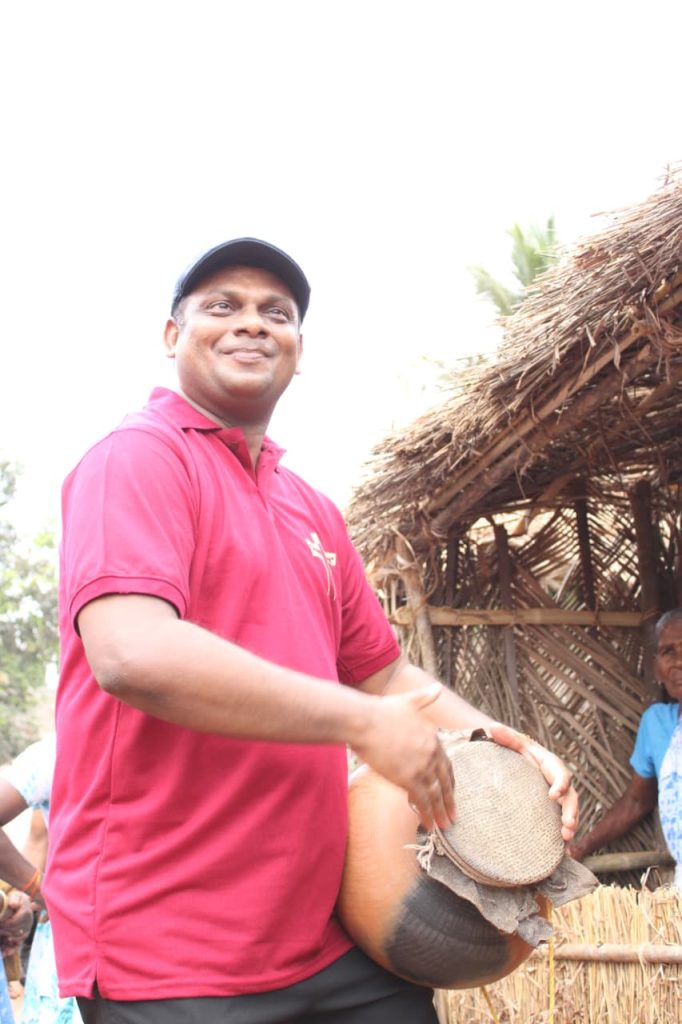
Participants prepared a range of traditional Goan dishes, many of which are rarely encountered today in their original form. The air filled with the rich aromas of soji, dried fish kismur, and other heritage recipes that carry with them not just flavour, but memory. Unlike contemporary adaptations, these dishes were cooked slowly over open flames, allowing textures and tastes to develop in ways that modern appliances cannot replicate.
Yet, what unfolded in Tilamol went beyond culinary revival. As the hours passed, the event transformed into a vibrant community gathering. Villagers and visitors moved from one ward to another, observing the kitchens, engaging in conversation, and immersing themselves in the experience. There was no barrier between participant and observer; everyone became part of the same unfolding narrative.
For many elders, the event was deeply personal. It was a return to routines they had once known intimately—a chance to reconnect with practices that had shaped their early lives. For the younger generation, it was an introduction to a world often spoken about but rarely seen. In that shared space, memory and discovery met, creating a bridge between past and present.
The significance of the event was further elevated by the presence of a distinguished panel of judges. The traditional kitchen setup competition was evaluated by Mr. Victor Hugo Gomes, known for his work in preserving Goan heritage through institutions such as Goa Chitra, Goa Chakra, and Goa Cruti, and Mr. Maendra Jocelino Araujo Alvares, the visionary behind Ancestral Goa (Big Foot). Their expertise ensured that authenticity, historical accuracy, and cultural sensitivity were central to the evaluation process.
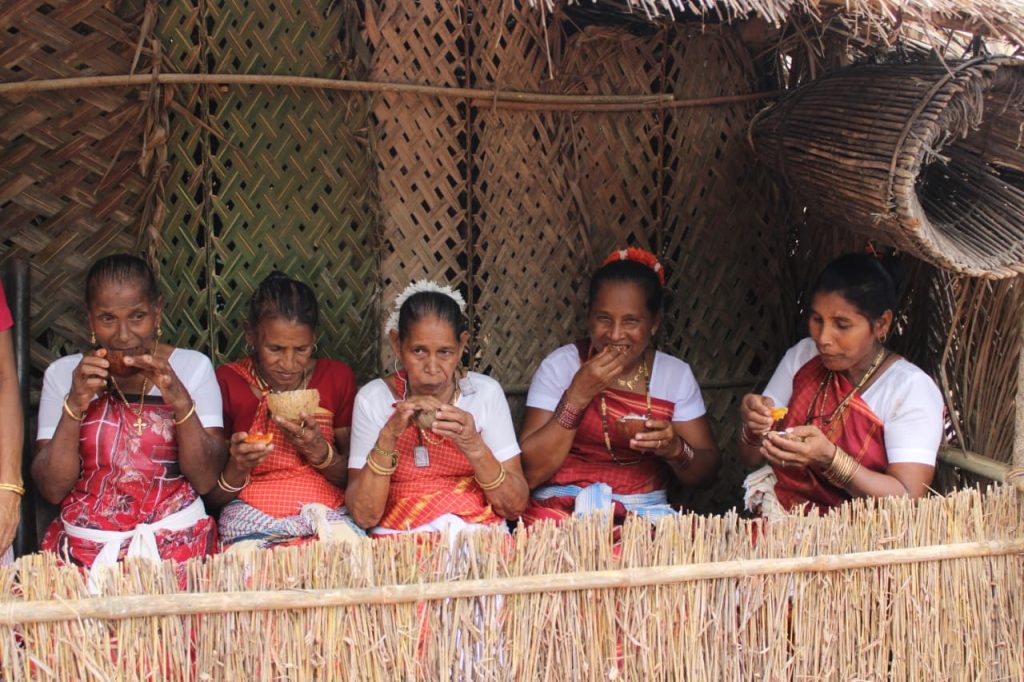
The cooking competition, meanwhile, was judged by Mr. Guilermo Da Gama, a hospitality professional with international experience, and Ms. Maureen Jocelyn Fernandes, an accomplished culinary expert and educator. Their presence brought a nuanced understanding of both traditional techniques and contemporary culinary standards, ensuring that the food was appreciated not only for its heritage value but also for its execution.
Despite the competitive framework, the spirit of Randne Pol remained firmly rooted in collaboration rather than rivalry. Each ward approached the event with dedication and pride, focusing not on outperforming others but on faithfully representing a shared cultural legacy. The kitchens, though simple in design, carried a quiet beauty—one that came not from polish or perfection, but from authenticity and care.
Behind every kitchen was visible effort. Community members invested time, energy, and resources, often balancing these preparations with their daily responsibilities. Their commitment reflected a deeper belief: that tradition is not something that survives on its own, but something that must be actively sustained.
This belief was evident in every aspect of the event. From the careful placement of earthen pots to the methodical preparation of ingredients, each detail spoke of respect—for the past, for the process, and for the people who had kept these practices alive.
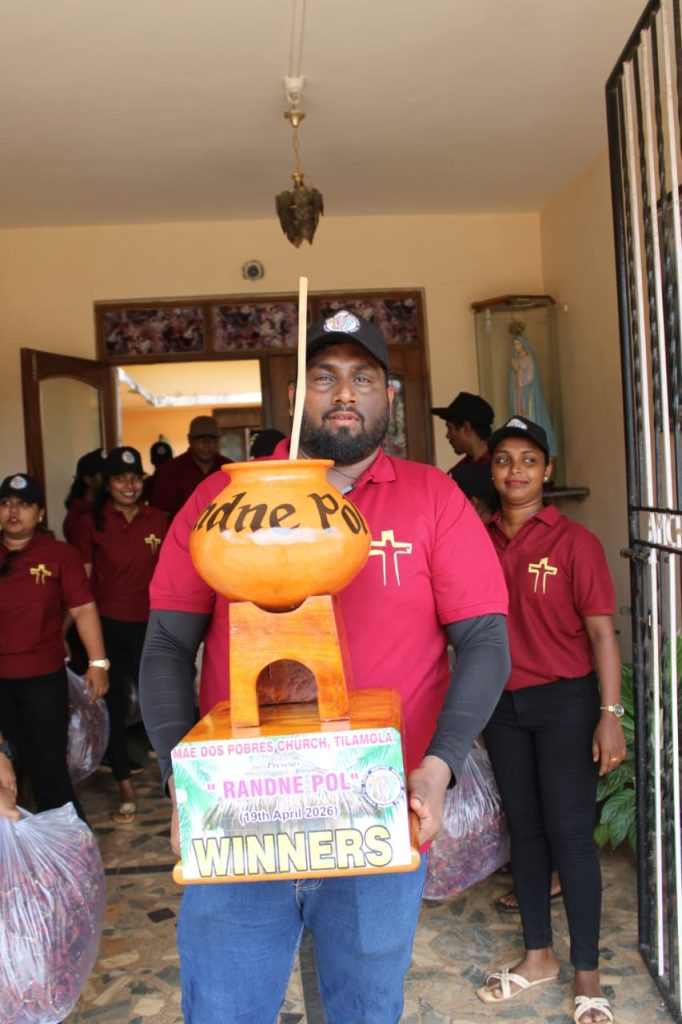
At the end of the day, Nirmalgara Ward was declared the winner, recognised for its exceptional attention to detail and authenticity. However, the announcement of results felt secondary to the larger achievement. What stood out was not who won, but what had been collectively revived.
The event was organised under the guidance of parish priest Fr Aldrin D’Costa, with the support of assistants Fr Aidan Fernandes and Fr Denrish D’Costa. Their leadership played a crucial role in shaping Randne Pol into more than just a parish activity. It became a meaningful intervention—one that encouraged reflection on what it means to preserve culture in a rapidly changing world.
In many ways, Randne Pol offered a quiet but powerful message. Goa’s traditions have not disappeared. The knowledge of how to build, cook, and live in these ways still exists—preserved in homes, in memories, and in practices that have endured despite changing lifestyles. What has changed is not the presence of this knowledge, but the frequency with which it is used.
Events like Randne Pol create the conditions for that knowledge to surface again. They provide a space where tradition is not reduced to nostalgia, but reintroduced as practice. They remind communities that cultural identity is not fixed in the past, but continuously shaped by what is chosen to be carried forward.
(Report by Ms Delisha Rebelo, Our Lady Mother of the Poor Church, Tilamola)