

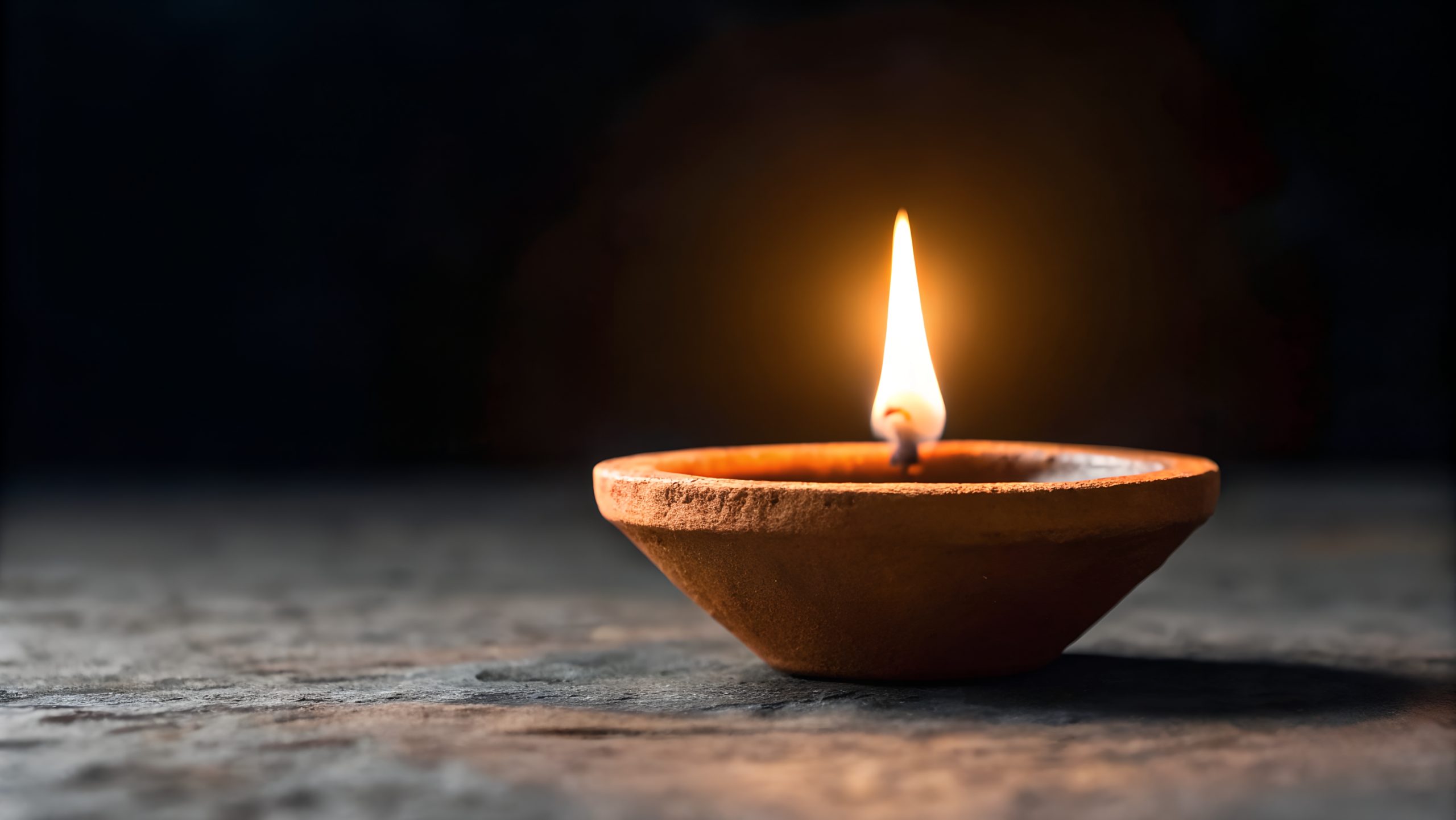
Hurry ruins saints as well as artists, wrote Thomas Merton in New Seeds of Contemplation. It is a disturbing observation, especially for those of us who believe that doing more is necessarily a sign of loving more. We live in a world that admires people who give endlessly, work tirelessly and remain available to everyone. But what happens when the desire to do good begins to consume us? When the flame that once brought light to others slowly burns away its own source of strength?
In Luke 12:35–38, Jesus tells his disciples: “Be dressed for action and have your lamps lit.” At first glance, the passage concerns vigilance, about servants awaiting their master's return. Yet the image of the burning lamp also invites us to reflect on how we sustain our commitment without exhausting ourselves.
Light Is for Others
In the first-century world, oil lamps required attention. They needed fuel, a functioning wick and protection from the wind. Light was something to be maintained, not simply switched on. The Greek expression hoi lychnoi kaiomenoi describes lamps that are burning. The accompanying instruction to have one's loins girded evokes readiness for action, recalling the Israelites preparing for the Passover (Exodus 12:11). Interestingly, Jesus gives this instruction immediately after speaking about anxiety, possessions and trust in God's providence (Luke 12:22–34). His call to vigilance is not an invitation to frantic activity, but to faithful readiness rooted in trust.
A lamp, however, does not burn merely for itself. Its light benefits others. Elsewhere, Jesus reminds his followers that a lamp is placed on a stand so that others may see (Luke 8:16). We encounter such lamps every day: a teacher who notices a struggling student, a nurse who offers reassurance after an exhausting shift, a parent who quietly sacrifices personal comfort, or a parish volunteer who serves without recognition. Their goodness makes the world brighter. But how long can a lamp continue giving light if nobody attends to its oil?
When Generosity Becomes Exhaustion
There is a subtle danger in generosity. We may begin serving out of love, but gradually find ourselves serving out of guilt, obligation or fear of disappointing others. Saying no becomes difficult. Rest feels undeserved. We measure our worth by how much we accomplish. Psychologists Christina Maslach, Wilmar Schaufeli and Michael Leiter observe that Burnout is a prolonged response to chronic emotional and interpersonal stressors on the job (Job Burnout, 2001). Their research identifies exhaustion, cynicism and reduced professional effectiveness as important dimensions of burnout. Although the term specifically concerns occupational stress, the experience of prolonged depletion resonates with many caregivers, volunteers and people engaged in ministry.
Religious commitment does not make us immune to exhaustion. Sometimes our Christian communities unintentionally glorify overwork. We admire those who never refuse responsibility, never take a holiday and never admit to being tired. We praise their sacrifice but seldom ask whether they are coping. Yet Jesus himself withdrew from the crowds to pray (Luke 5:16). When the disciples returned from their ministry, he invited them to come away to a quiet place and rest (Mark 6:31). Jesus was compassionate, but he was not controlled by every demand placed upon him. There is a difference between giving ourselves in love and losing ourselves in the process.
Refill the Lamp
Strictly speaking, Luke 12 does not mention refilling the lamps. That detail belongs more naturally to the parable of the ten bridesmaids in Matthew 25. Nevertheless, the image invites a practical reflection: no oil lamp can burn indefinitely without replenishment. Neither can we.
Parker J. Palmer, in Let Your Life Speak, writes: “Self-care is never a selfish act.” He understands it as responsible stewardship of the life entrusted to us, a life through which we can serve others. This is particularly important for Christians who sometimes mistake self-neglect for self-sacrifice. Prayer, the Eucharist, Scripture and silence are not additional burdens on an already crowded schedule. They are opportunities to receive what we so readily try to give others.
Replenishment also involves ordinary human needs: adequate sleep, friendship, recreation, healthy boundaries and the willingness to seek help. Caring for ourselves enables us to care for others with greater freedom and generosity. Communities, too, must share responsibility. A parish that depends on a handful of perpetually exhausted volunteers needs more than encouragement. It needs a healthier distribution of work. Perhaps we should occasionally ask: What nourishes my life? What drains it unnecessarily? Am I serving out of love or merely out of obligation?
The God Who Serves
The most beautiful surprise in Luke's passage comes at the end. When the master returns and finds his servants awake, he does something extraordinary. He invites them to sit at table and personally serves them (Luke 12:37). The roles are reversed. The servants who have spent the night waiting upon their master discover a master who waits upon them. The image anticipates Jesus washing his disciples' feet (John 13).
Here lies the heart of Christian discipleship. We are not simply people who work tirelessly for God. We are people who have first been loved and served by God. We give because we have received. We love because we have been loved. Perhaps spiritual maturity includes learning not only how to serve, but also how to receive.
Our world needs people who burn with compassion, conviction and hope. But it does not need them reduced to ashes. Jesus calls us to keep our lamps burning, not to consume ourselves in one spectacular blaze. A steady flame, faithfully maintained, can illuminate many long nights.
Burn with love. Burn with purpose. Burn with hope. But do not burn out.
References
Jackson-Jordan, E.A. (2013) ‘Clergy burnout and resilience: A review of the literature’, Journal of Pastoral Care & Counseling, 67(1), pp. 1–5.
Maslach, C., Schaufeli, W.B. and Leiter, M.P. (2001) ‘Job burnout’, Annual Review of Psychology, 52, pp. 397–422. https://doi.org/10.1146/annurev.psych.52.1.397 (Accessed: 12 September 2026).
Merton, T. (1961) New seeds of contemplation. New York: New Directions.
Palmer, P.J. (2000) Let your life speak: Listening for the voice of vocation. San Francisco, CA: Jossey-Bass.
World Health Organization (2019) Burn-out an occupational phenomenon: International Classification of Diseases. Available at: https://www.who.int/news/item/28-05-2019-burn-out-an-occupational-phenomenon-international-classification-of-diseases (Accessed: 24 September 2026).