

In his influential work Non-Places: Introduction to an Anthropology of Supermodernity, the French anthropologist Marc Augé introduces an important distinction between what he calls anthropological places and non-places. Anthropological places, according to Augé, are spaces that hold deep meaning in human life because they embody three defining characteristics: identity, relationships, and history. These elements give certain locations a depth that shapes how individuals understand themselves and their world.
First, anthropological places are places of identity. To be born into or rooted in a particular place is to inherit the meanings attached to it. Over time these meanings become part of one’s personal and collective identity. A place is therefore more than a geographical location; it is a setting through which individuals come to understand who they are. Shared customs, memories, and experiences gradually weave identity into the fabric of the place itself.
Second, anthropological places are places of relationships. To inhabit a place is to exist within a network of relationships with others who share that space. Human interactions give life to the place and transform it into a community. These bonds create a sense of belonging that anchors individuals socially and emotionally, making place not merely territory but a relational environment where community is formed.
Third, anthropological places are places of history. Meaningful places carry stories from the past that provide continuity and stability. Whether preserved through memory, tradition, or recorded history, these narratives reinforce identity and relationships by embedding them within a shared story across generations. A place becomes familiar and trustworthy because it is rooted in memory.
Augé contrasts these meaningful locations with what he calls non-places. Non-places are spaces that lack identity, relationships, and historical depth. Modern life produces many such environments: airports, highways, shopping malls, and bus stations. These are spaces people pass through rather than inhabit. They function efficiently, but they rarely generate belonging or memory in the way anthropological places do.
At first glance, the distinction appears rational and persuasive. Yet it also carries a subtle danger. Human beings may become so attached to particular spaces of identity and memory that they begin to dismiss other spaces as insignificant or empty. We may cling tightly to familiar places while failing to recognise the possibility of meaning in new or unexpected spaces. This insight offers an interesting lens through which to view the Easter story.
Gardens in the Biblical Imagination
The Easter narrative unfolds against a background rich in the symbolism of gardens. Gardens occupy a significant place in the biblical imagination, representing both life and struggle, both creation and redemption.
The first garden that immediately comes to mind is the Garden of Eden. At the beginning of the biblical story, creation unfolds within this garden of harmony and beauty. Here God delights in the goodness of creation, and human beings, created in the image of God, live in communion with their Creator. Eden represents the garden of life, a place where humanity experiences belonging within God’s creation.
Another important garden appears later in the Gospel narrative: the Garden of Gethsemane. Unlike Eden, Gethsemane is a place marked by anguish and struggle. Here Jesus confronts the approaching reality of suffering and death. The garden becomes the setting for his intense prayer and inner turmoil. The Gospels describe his distress so vividly that his sweat becomes like drops of blood falling to the ground. Gethsemane thus becomes a garden of sorrow and surrender, where Jesus experiences isolation, fear, and abandonment as his disciples fail to remain awake with him.
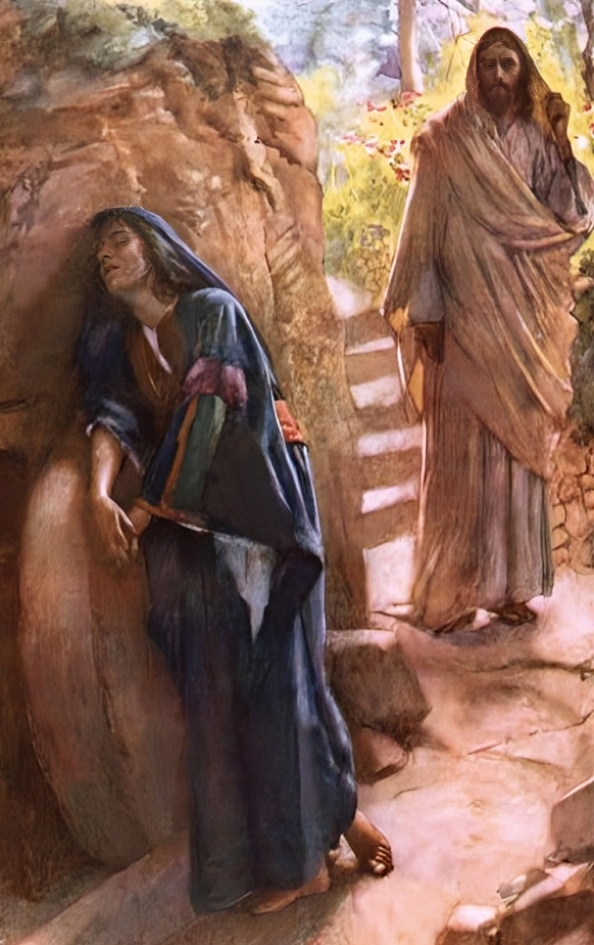
These two gardens frame the biblical story of creation and redemption. Yet the Easter narrative introduces a third garden, one that carries profound theological significance, the garden of the Resurrection. The Gospel of John places the resurrection within a garden that also functions as a graveyard. Early in the morning, while darkness still lingered, Mary Magdalene came to the tomb where Jesus had been buried. Although the setting was technically a garden, it must have felt to her like a place of death and despair. Only days earlier she had witnessed betrayal, violence, and crucifixion. The world she knew had collapsed under the weight of cruelty and injustice. Standing outside the tomb, Mary wept inconsolably. Her grief was so overwhelming that even when Jesus himself stood before her, she failed to recognise him and assumed he was the gardener.
Mary’s reaction reveals something important about the human experience of place. She searched for Jesus in the only place that made sense to her: the tomb. That tomb had become her anthropological place. It contained the identity of her grief, the history of the crucifixion, and the memory of the teacher she loved. Her sorrow anchored her to that space. Because her identity and memory were fixed on the tomb, she could not yet perceive the new reality unfolding before her. The garden surrounding the tomb was no longer merely a graveyard. Through the resurrection, it was becoming a place of new creation.
The Danger of Being Trapped in Familiar Spaces
The Easter narrative reveals a deeper human tendency. Like Mary, people often become trapped within spaces defined by their past experiences. These spaces may be shaped by grief, disappointment, anger, or prejudice. Over time they become our own anthropological places, filled with personal identity and memory. Yet these places can also imprison us. When we cling too tightly to them, we fail to recognise new possibilities that emerge around us. Life moves forward, understanding deepens, and faith continues to unfold in new ways. Still, many people remain fixed in the spaces of their past, unwilling to step beyond them. This fixation resembles standing endlessly before the empty tomb. The tomb becomes familiar because it carries memory and meaning. But it also prevents us from recognising the new life revealed by the resurrection.
Easter as an Invitation to Move Beyond the Tomb
The message of Easter is therefore far greater than the discovery of an empty tomb. The resurrection proclaims that Jesus is no longer confined to the space of death. The tomb could not hold him. The place of despair could not define his future. Christ has moved beyond the grave into the fullness of eternal life.
For Mary Magdalene to recognise this truth, she needed to “turn away” from the tomb. When Jesus called her by name, the veil of grief lifted. In that moment she recognised him and responded with a word of deep reverence and love: “Rabboni.” That moment represents a profound spiritual turning point. Mary moves from the graveyard of despair into the garden of resurrection. The place that once symbolised death becomes the setting of new life.
Easter therefore poses a question to each of us: Where do we dwell? Do we remain imprisoned in the tombs of our past, defined by grief, resentment, or nostalgia? Or are we willing to step into the new spaces that the risen Christ opens before us?
Stepping into the Garden of New Life
The Easter message ultimately calls believers to transformation. It invites us to step out of the spaces that imprison our hearts and into the new life that Christ offers. The tomb does not have the final word. The resurrection opens a horizon of hope, renewal, and belonging.
This Easter invites us to leave behind the tombs that confine us. It calls us to step beyond the spaces of fear and regret and to recognise the risen Lord who stands before us, calling each of us by name. For in the light of the resurrection, even a graveyard can become a garden where life begins again.
(Published on Renewal, Vol LXIV, No. 7, April 1-15, 2026)