

- Introduction
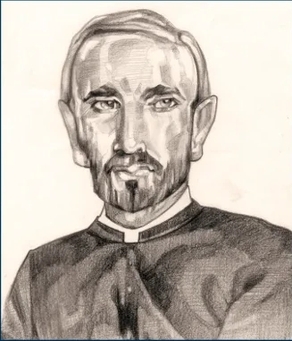
The year 2019 was the fourth death centenary of an eminent Jesuit missionary Fr. Thomas Stephens, who is the first known Englishman to have set foot and lived on the Indian soil, in 1579.[1] He worked as a missionary for forty years in India (1579-1619) out of which thirty-nine years in Goa with an interlude of one year (1611-1612) in the Vasai fort (Bassein, Mumbai). His contribution as a priest and pundit has been summed up in several sobriquets that are attributed to him: “Father of Marathi Christian literature,” Shakespeare of the Konkan Coast,” “Father of inculturation in India,” “Poet par excellence,” etc. This visionary English Jesuit played a prominent role in Goa as a sacerdot, secretary and superior, of both, the mission of Salcete and of the erstwhile Jesuit College (1590-1594),[2] the predecessor of the present day Rachol Seminary, the very same institution where he published his celebrated magnum opus Kristapurana; and today, becomes a catalyst and a challenger for us in the mission of proclaiming Christ.
- Biographical Sketch
Thomas Stephens was born in Clyffe Pipard, Bushton, Wiltshire, England in 1549, in a wealthy merchant family of Thomas and Jane. Not many details about his death are available. Some scholars are of the opinion that he died in 1619 at Old Goa in a Professed House attached to Bom Jesus and was buried there itself whereas some say he was probably buried in the cemetery (which no longer exists) attached to the Jesuit College of Rachol.[3]
Thomas Stephens had a brother, Richard Stephens who was also a priest. He probably studied at the Oxford College and was elected a scholar of the Winchester College. The Letters that were circulated in England from the far away Eastern mission played an influential role in shaping his life to become a missionary. It was a time of religious conflict between the Protestants and Catholics. There were hostilities between the two and the English monarchy tried to exert control over the Catholic Church. During this time of persecution Thomas Stephens moved out of England to Rome. Here, he joined the Society of Jesus as a novice at the international Roman novitiate of St. Andrea with Fr. Fabio de Fabiis as his novice-master, on 20th October 1575.[4] He expressed his desire of becoming a missionary to his Superior General Fr. Everard Mercurian who granted him the permission to go to the Portuguese India while he was pursuing his second year of Philosophy.
- Goa: The Call of the East
When the permission to work in the East was granted, Thomas Stephens proceeded from Rome to Lisbon, and in the company of another twelve young Jesuits embarked on a voyage to Goa. They left Lisbon on 4th April 1579 by a caravel São Lourenço and reached Goa on 24th October 1579. Thomas Stephens was a young scholastic of thirty years when he arrived in Goa. He took up his theological studies in the St. Paul’s College Old Goa and within a year was given the sacred orders due to the urgency in the mission work. Hence, he did not go through the normal process of formation as was required of a Jesuit. He informed his brother Richard Stephens about it, “in my first year I was afflicted with serious illness, but during the same year I recovered, and shortly afterwards, as the mission work was in great need on account of the serious shortage of workers, it was necessary to give me the Sacred Orders”.[5] He was ordained a priest in the year 1580 by Archbishop of Goa, Henry de Tavora[6] and received the final vows in 1589 as a Spiritual Coadjutor of the Order. Immediately after his ordination, he was sent to the mission of Salcete where he toiled for thirty-five years.[7]
- Salcete: The Ground for Evangelization
It becomes pertinent to situate Fr. Thomas Stephens in the historical context in order to understand his apostolate. During the time of Viceroy Dom Pedro Mascarenhas (1554-1555) the territory of Goa was divided among the various religious Orders for the purpose of evangelization. The Jesuits received some parts of Ilhas, islands of Divar and Chorão and the entire peninsula of Salcete. The latter had a population of around sixty-thousand non-Christians, dominated by Brahmins. By 1560, there were few Catholics, less than thousand, and in order that they may not relapse, Jesuits took up a permanent residence in Salcete in 1566 in the village of Rachol near the headquarters of Captain of Salcete, on the site where the present Church of Rachol stands. The number of converts gradually started to increase and in order to facilitate conversions; Viceroy Antão Noronha issued a decree in 1565 that prohibited neither any new construction of religious shrines nor allowing repair of the old ones. Such measures invoked hostility and attacks on the Jesuits. The Portuguese started to counter them by razing down religious shrines with an earliest case happening in 1567 on the account of an attack on a Jesuit priest.[8] Finally, Diego Rodriguez, captain of Salcete demolished all religious shrines of Salcete, in 1567. This created serious aggression and antagonism towards the Christians due to this aggressive policy that was adopted by the Portuguese. The non-Christians reciprocated by torching the Churches, institutions as well as making grievous attacks on the Christians.
- “The Most Holy Apostle” in the Mission of Salcete
Fr. Thomas Stephens treaded a different path from his counterparts. His life was marked by sensibility and sensitivity towards the local culture and their beliefs. He, with great love for the people, demonstrated through acceptance and dialogues, worked passionately in the mission of Salcete. Let us now deal with his apostolate.
- Portent of Peace
Fr. Thomas Stephens had arrived in Salcete in 1580. As seen above, it was a time when the non-Christians were dead against the Christians. This is seen in his Letter to his brother written on 24th October 1583, which says, “…the pagans, of whom there are a great many, all of a warlike character and are sworn foes of the Portuguese name. They are dead against the Christian faith, and have for many years been doing great harm to the Christian republic, partly by their open attacks and partly by their conspiracies. For, as in many other places subject to the Portuguese, the pagan temples have been destroyed…”[9] Within three years of his stay he had to face a traumatic violent incident. Fr. Rodolfo Acquaviva, another three priest, a religious brother and forty lay persons who had gone to the village of Cuncolim to work on peace and re-open the mission, on 25th July 1583, were massacred. Their bodies were badly mutilated and were dumped in a well. The young priest, Fr. Thomas Stephens had to dialogue with the local non-Christians to take their bodies out and to give them a dignified burial. This incident made him reflect and re-check on the methods of evangelization employed by the Jesuits and was convinced that there was a need of different path. This conviction is reflected in his Letter to his Superior General, that states, “we suffered from great grieves, caused by overzealous men drawn by their own interest and favoured by the captain with undeserved favours, which brought the risks of losing a village of Christians, whose conversion had cost us a lot”.[10] Hence, Fr. Thomas Stephens adopts a diverse approach from aggression to assimilation; from confrontation to working in communion, harmony and dialogue. This peaceful approach wins him people’s friendship and acceptance.
- Salvation of the Souls
Fr. Thomas Stephens was genuinely interested in giving the people Indian Christ. During the first half of his ministry he entirely worked for the salvation of the souls. He became a vicar in various parishes namely Mormugão, Benaulim, Lotoulim and Navelim. Henry More’s historical account Historia Missionis Angelicanae Societatis Jesu (1660) says he looked after nineteen parishes.[11] His concern of depriving the people spiritual treasure is evident in his Letter (1601) that expresses the need for more priests in Salcete, as there were some parishes without priests especially the parishes of Verna, Curtorim, Benaulim and Lotoulim. He says the absence of missionaries was depriving the people from receiving religious teachings and it was becoming a cause for people to live an immoral life. He also doesn’t fail to express in that Letter the good things he observed among the people in their desire to know Christ such as taking delight in the Church functions, devoutly attending mass and children passionately learning tenets of faith. The Letter was received positively and fifteen parishes received Jesuit priests namely Margão, Lotoulim, Orlim, Mormugão, Rachol, Cortalim, Asolna, Velsão, Verna, Majorda, Navelim, Benaulim, Deusua, Curtorim and Carmona. With their arrival the spiritual climate greatly improved leading to great increase in Christian population; this was mentioned by Fr. Thomas Stephens in his Letter of 1608. All of them were engaged in preaching, teaching catechism and hearing confessions in Konkani.[12] He was not just satisfied with mere preaching, teaching catechism and translating prayers but adopted creative methods in the proclamation of Christ. This fervent desire for evangelization is mirrored in the growth of Christian population. When Fr. Thomas Stephens had arrived there were around eight thousand Catholics in Salcete, but fourteen years later the number increased to thirty-five thousand and during the time of his death it was almost entirely Catholic.[13]
- Intellectual Apostolate
Fr. Thomas Stephens adopted an “intellectual apostolate” as envisioned in the Provincial Council of Goa, 1567.[14] He studied the local languages such as Sanskrit, Konkani, Marathi while also being proficient in English and other European languages. He educated many and he writes that there was good attendance in school and for value education.[15] He took over the work on Konkani grammar which was started at St. Paul’s College Old Goa and continued by Fr. Henry Henriques. He completed this work by 1619 in a manuscript form and was published posthumously in 1640 at Rachol with an enlarged version by Fr. Diogo Ribeiro and four other Jesuit priest entitled Arte de Lingoa Canarim. It was the first Konkani grammar to be printed in Portuguese language. It proved beneficial to the missionaries to preach, hear confessions and even write books. Its second edition was published in 1857. His another work published posthumously in 1622 at Rachol was Doutrina Christã em Lingua Bramana-Canarin, which was a translation and adaption in Konkani of the Portuguese work “Christian Doctrine” by Fr. Marcos Jorge.[16] It was a manual of a Christian doctrine in the spoken dialect of Goa. Its second edition was published in 1945. His third work was entitled Discurso sobre a vinda de Jesus Christo Nosso Salvador ao Mundo popularly known as Kristapurana. It is a treatise on the coming of the redeemer into the world. The local educated class before conversion would read literature in Marathi. After their conversion they felt this void as the literature in Portuguese and Latin were foreign to them. Hence, a request was made by a Brahmin convert to Fr. Thomas Stephens to provide them literature in their own language. This need to give the native people Christ in their own context and culture led Fr. Thomas Stephens to pen the Christian purana in a narrative form. This work was completed in 1605-1608. It was originally written in Marathi and translated into Konkani by 1614.[17] In 1608 he had written a Letter to the Superior General Fr. Claudius Acquaviva that he had desire to print it in language and alphabet of the land like Fr. Henry Henriques who had printed the Tamil purana in the Tamil types in 1578; “It has been many years that I have greatly desired to see in the Province some books printed in the language and alphabet of the land, as there are in Malabar with great benefit for that Christianity”.[18] But this dream remained unfulfilled till his death as the Spanish lay brother Juan Gonçalves who had produced the Tamil types with the help of Fr. Juan de Faria had passed away in Goa in 1582 and there was no one to carry forward his work. This dream came to fruition in the year 1956 when it was printed in Devanagri. There were three editions of Kristapurana in 17th century itself in 1616, 1649 and 1654; the first two were published in Rachol while third was published in Old Goa, but all in Roman script. Today, there are nine editions of Kristapurana.
- Life and Living in the Community
Fr. Thomas Stephens practiced the religious teaching in his life and was known to practice what he preached. He was faithful to his religious duties and community responsibilities. He guided them in their spiritual pursuits. As a Superior, he took interest in imparting discipline and fraternal correction and admonished those who showed excessive zeal for economics and temporal development while emphasizing zeal for evangelization and learning local languages. He wrote to his Superior expressing the sorry state when some of the missionaries gave up their educational as well as religious duties. He maintained balance in his work. Amidst this challenging community life, he had to face rejection and criticism. There were some who opposed his way of functioning when he tried to impose learning of local languages and cultures. In 1595, a petition was made by a visitor, Fr. Nuno Rodrigues to the Superior to relieve him as the Rector of Salcete, on the charge, “for not having the talent for it, though very virtuous and a very good religious”.[19] But there were not many of this opinion. In 1593, when he was the Superior of Salcete, an assessment of his administration was done that describes him as a “very gifted, intelligent, good judgment and prudence, choleric tempered, enthusiastic, good talent for pastoral, conversion work”.[20] This clearly shows that he was a model in the community for others.
- Compassionate Catholic Priest
When some of the English merchants namely Ralph Fitch, John Newberry, James Story, and William Leedes who had come to Goa by land, were suspected as spies of Dom Antonio and were imprisoned by the Portuguese, Fr. Thomas Stephens did all possible to release them. This help was greatly appreciated by Ralph Fitch. Francois Pyrard de Laval, French traveler, who was also imprisoned on another occasion in Goa, writes about Fr. Thomas Stephens as the one who “worked together with such effect that we were set free after an imprisonment of nigh three weeks.”[21] Robert Sherley, another Englishman, who faced similar problem, mentioned in his Letter that Fr. Thomas Stephens was always there to aid the foreigners who were in distressed. John Hugh Van Linschoten, a Dutchman, also extols his kindness. The account of Ralph Fitch which was published later by Richard Hakluyt made Fr. Thomas Stephens well-known in his country for his help to his downtrodden and depressed countryman in Goa. As a true apostle of Christ he looked for the causes that were hampering the development of the locals, took interest in finding out the needs of the people, practiced charity and was ever ready to help those in need. He writes to his Superior in a Letter 6th December, 1601 about the importance of Church and school for the benefit of the locals.
Like the apostles, Fr. Thomas Stephens too had his cup of suffering that probably caused his death, writes Nelson Falcão. He says he had to face racial discrimination amidst majority of the Iberian Jesuits, he being a minority “Englishman” and jealousy due to his talent. When it was time for him to print his purana he was transferred to Vasai. He was also not even given the final vows for a long time. In spite of all this, it did not deter him from working for the people whom he loved the most. He was genuinely concerned about their spiritual and other welfare. Till his death he was unwearied in his work in that vineyard (Salcete), writes Henry More in his historical account.[22] In return he was well accepted by the people of Salcete. Pedro de Ribadeneira sums up this relationship in his work Bibliotheca Scriptorum Societatis Jesu, in the following words, “He flourished with such great gentleness, humility and above all obedience, winning praise. The people of Salcete prayed to God for his life with great fervor. They loved him as a most loving parent and they venerated him as the Most Holy Apostle (for so they called him).[23] In fact, the meaning of his name is ‘conqueror’ and this is true in his case; Padre Estevão, as he was called, conquered the people of Salcete with his unique methods of evangelization.
- Kristapurana: An Indian Bible
Fr. Thomas Stephens is celebrated largely for his work, Kristapurana. In Sanskrit the word purana means ancient, which is derived from the word puri meaning city hence, the ancient story describing the city life.[24] It was written in the language of the masses that is in Marathi-Konkani, originally entitled Discurso sobre a vinda de Jesus Christo Nosso Salvador ao Mundo which was later popularly known as Kristapurana. It is a Biblical epic on the coming of the saviour Jesus Christ into the world. This work is based on the Old and New Testaments of the Bible, written in two parts of thirty-six and fifty-nine avasvaras (chapters), totaling 10,641 strophes in the ovi meter.[25]
Fr. Thomas Stephens did not just translate the Christian literature into Marathi but used the style of non-Christian religious literature for its poetic, aesthetic and lexical expressions.[26] Hugh Van Skyhawk says it is modeled on Eknatha’s work. The meter and rhetorical devices are derived from bhakti literature. He incorporated Vaisnavaite elements like St. Thomas Aquinas integrating Aristotle’s philosophy into Christianity or St. Paul incorporating Hellenistic philosophy into Jewish Christianity.[27] He made use of the local literary style for the benefit of Christians so that it may become easier for them to grasp the Christian thought. It differs only in its Christian content and not in literary form and composition. As scholar S.G. Tulpule on Kristapurana says it is like a sanctuary with Jesus in the center while the structure and decoration that surrounds it are in non-Christian style.[28]
Fr. Thomas Stephens mended these two cultures with the literary technique of the native land. In Kristapurana one finds Indian elements namely patravali (a leaf used to serve meals), gopalu (cow herd) instead of shepherds. There is a reference to God commanding the Lucifer to touch his feet with his head which is clearly a depiction of an Indian tradition. He made a conscious choice in the use of motifs, traditions, semantics, etc. Salesian scholar Nelson Falcão who has done his doctoral research on the Kristapurana gives us the choice made by Fr. Thomas Stephens in employing the terms:
- Omission of Terms: He avoided certain non-Christian terms such as sruti, veda which are proper to Hinduism, thus avoiding any conflict between the two religions.[29]
- Adaptation of Terms: The principle of continuity-change was followed. He accepted words such as smrti, puja, sastra, etc. and re-interpreting them in Christian connotation making it suitable to Christian doctrine. Certain borrowed words were kept intact without changing their meanings for instance mukti.
- Innovation of Terms: Where the local expressions or words were lacking he formulated new terms such as papa-karma, deva-katha, parana-sastra, etc.[30]
The Kristapurana was well accepted by the people. People would hurry to the Church to hear it. It is said, during the time of Christianization of Moira in 1619, a copy of Kristapurana was presented by the Archbishop of Goa to a woman from the village as she was the only one who could read the Roman script. She would read it for the people on Sundays and feast days before the mass.[31] Fr. Thomas Stephens himself mentions in one of his Letter that it was well received by the locals and was read on Sundays and feasts days. It was accepted not only by the Christians but was admired and taken pride in it even by the gentiles, writes H. Hosten in 1620.[32] Most of the copies of Kristapurana thatgot disseminated in Goa and beyond the borders among the diaspora were in the hand-written form.
- Theology Enshrined in Kristapurana
The theology that is used in the Kristapurana is Tridentine theology. Fr. Thomas Stephens maintained a balance between Tridentine theology and Vaishnava traditions of his days. His work narrates the history of salvation from the creation to the redemption brought by Jesus. In presenting this mystery he unfolds the Trinity, Mary, angels, sin, sacraments and Church. It is addressed to all the varnas (caste) as he believes that Christ is born for all. He does not discriminate the locals as inferior but as worthy of salvation and that Christ has come to save even them.
Fr. Thomas Stephens was following the policy of adaptation in evangelization but was not a blind imitator of Vaishnava traditions of his days. This can be well understood in his advocacy of worship of one God. He employed important non-Christian believes such as mukti, samsara, dharma, moksha, etc., while also creating new expressions such as jnana-snana for baptism, adipurusace karma for original sin, satva-krpa for grace, swamiya-smrti for Biblical Revelation, devacara for Lucifer, etc.[33] He was making a conscious attempt in giving Indianized Christian literature. This approach of inculturation and contextualization was later emphasized by the Vatican Council II. He gave Christ to the people in an Indian way keeping the Christian doctrine intact. In this effort he influenced Italian Jesuits like Fr. Roberto de Nobili (1577-1656), Fr. João de Britto (1647-1693) and Fr. Costanzo Beschi (1680-1747) who were working in the Madurai Missions (Tamil Nadu).[34] He also influenced the other Jesuits to compose puranas namely French Jesuit Fr. Étienne de la Croix, who was the rector of the Rachol college, preceding Fr. Thomas Stephens and who composed Discourso sobre a vida do Apostolo Sam Pedro popularly known as “Peter Purana”. Another priest who was influenced was a Portuguese Jesuit Antonio de Saldanha who wrote on the life of St. Anthony.[35] However, he differs from them on the count that his literature was not aggressive or abusive. He does not downplay other religions or devalue the Hindu pantheon like the author of “Peter Purana.” These authors followed what the Provincial Council of Goa, 1567 had asked that is to produce the literature in vernacular that would refute their beliefs.[36]
Fr. Thomas Stephens brought paradigm shift in evangelization by mending Gospel and culture. As Nelson Falcao says through Kristapurana he entered the Hindu world and brought the Hindu world to Christ.[37] Through his encounter he enriched the cultures with Christ message of universal salvation and his unique role in the history of salvation. Commenting on the purana of Fr. Thomas Stephens the Jesuit Hans Staffner writes, “With the exception of St. Augustine’s City of God, I do not know of any other work that would equal the Purana in the forcefulness with which, the chief arguments in favor of Christ’s divinity are presented.”[38] The Church needs to draw inspiration from Fr. Thomas Stephens in using new forms and methods of evangelization that are rooted in the local culture.
- Conclusion
Fr. Thomas Stephens is a true missionary who has rendered his services in religious, social and cultural spheres in the peninsula of Salcete. Being broad-minded and opened to all. His humanistic approach and love for the local literature, language and culture yielded him positive results. He employed non-aggressive and contextualized methods that were stressed later by the Vatican Council II. He practiced much ahead of his time what was said in the years to come, to use the “narrative methods akin to Asian cultural forms are to be preferred. In fact the proclamation of Jesus Christ can most effectively be made by narrating his story as the Gospels do”.[39] He did not just translate the texts but was an original thinker and visionary.[40] He created Indian Christian literature and his genius lies in presenting Christian beliefs and teachings in the images of non-Christian, giving Christ to the people in the local avatar without abandoning the principles of Christianity.
(This article was first published on Luceas)
References
[1] Cf. Georg Schurhammer, “Thomas Stephens, 1549–1619,” in The Month, Vol. 13 (April 1955): 198.
[2] Cf. Joseph Thekkedath, History of Christianity, Vol. II, (Bangalore: Church History Association of India, 1988), 397.
[3] Cf. Gerson da Cunha, The Konkani Language and Literature, (Bombay: Government Central Press, 1881), 27-28.
[4] Cf. Cyril Veliath, “Thomas Stephens - A Human Monument of Inculturation in India,” in Bulletin of the Faculty of Foreign Studies, no.46 (2011): 9.
[5] Francis Correa, “The Shakespeare of the Konkan Coast - Fr. Thomas Stephens (1549-1619),” in Vidyajyothi, Vol.83 (June 2019): 66.
[6] Cf. Ibid, 65.
[7] Cf. Anthony da Silva, “Thomas Stephens: Priest and Pundit,” in Fr. Thomas Stephens – A Visionary Scholar, (Porvorim: TSKK, 2020), 6.
[8] Cf. Joseph Thekkedath, History of Christianity, Vol. II, (Bangalore: Church History Association of India, 1988), 331-332.
[9] Anthony da Silva, “Thomas Stephens: Priest and Pundit,” in Fr. Thomas Stephens – A Visionary Scholar, (Porvorim: TSKK, 2020), 6.
[10] Clifford Pereira, “Thomas Stephens – An English Jesuit in Goa,” in Sod – TSKK Research Bulletin:5 (2003): 67.
[11] Cf. Nelson Falcão, “Fr. Thomas Stephens’ Encounter with Religions,” in Fr. Thomas Stephens – A Visionary Scholar, (Porvorim: TSKK, 2020), 66.
[12] Cf. Joseph Thekkedath, History of Christianity, Vol. II, (Bangalore: Church History Association of India, 1988), 338-340.
[13] Cf. Cyril Veliath, “Thomas Stephens - A Human Monument of Inculturation in India,” in Bulletin of the Faculty of Foreign Studies, no.46 (2011): 169.
[14] Cf. Kelwin Monteiro, “Fr. Thomas Stephens: A Visionary Par Excellence,” in Sod – TSKK Research Bulletin:17 (2013): 10-11.
[15] Cf. Nelson Falcão, “Fr. Thomas Stephens’ Encounter with Religions,” in Fr. Thomas Stephens – A Visionary Scholar, (Porvorim: TSKK, 2020), 60.
[16] Cf. Joseph Thekkedath, History of Christianity, Vol. II, (Bangalore: Church History Association of India, 1988), 409.
[17] Cf. Francis Correa, “The Shakespeare of the Konkan Coast - Fr. Thomas Stephens (1549-1619),” in Vidyajyothi, vol.83 (June 2019): 69.
[18] Anthony da Silva, “Thomas Stephens: Priest and Pundit,” in Fr. Thomas Stephens – A Visionary Scholar, (Porvorim: TSKK, 2020), 13.
[19] Ibid, 11.
[20] Ibid, 8.
[21] Cyril Veliath, “Thomas Stephens - A Human Monument of Inculturation in India,” in Bulletin of the Faculty of Foreign Studies, no.46 (2011): 168.
[22] Cf. Nelson Falcão, “Fr. Thomas Stephens’ Encounter with Religions,” in Fr. Thomas Stephens – A Visionary Scholar, (Porvorim: TSKK, 2020), 66.
[23] Ibid, 69.
[24] Cf. Nelson Falcão, Kristapurana of Father Thomas Stephens (1549-1619), (Bengaluru: Kristu Jyoti College, 2012), IXXIII.
[25] Cf. Ibid, IXX.
[26] Cf. Alexander Henn, Hindu-Catholic Engagements in Goa – Religion, Colonialism, and Modernity, (New Delhi: Orient Blackswan, 2014), 66.
[27] Cf. Nelson Falcão, Kristapurana: A Christian-Hindu Encounter, (Gujarat: Gujarat Sahitya Prakash, 2003), 6.
[28] Cf. Francis Correa, “The Shakespeare of the Konkan Coast - Fr. Thomas Stephens (1549-1619),” in Vidyajyothi, vol.83 (June 2019): 69.
[29] Cf. Nelson Falcão, Kristapurana: A Christian-Hindu Encounter, (Gujarat: Gujarat Sahitya Prakash, 2003), 206.
[30] Cf. Nelson Falcão, Indian Christian Theology, (Bengaluru: Asian Trading Company, 2019), 8-9.
[31] Cf. Joseph Thekkedath, History of Christianity, Vol. II, (Bangalore: Church History Association of India, 1988), 346.
[32] Cf. Nelson Falcão, Kristapurana of Father Thomas Stephens (1549-1619), (Bengaluru: Kristu Jyoti College, 2012), IXX.
[33] Cf. Nelson Falcão, Kristapurana: A Christian-Hindu Encounter, (Gujarat: Gujarat Sahitya Prakash, 2003), 205-6.
[34] Cf. Ibid, 2.
[35] Cf. Alexander Henn, Hindu-Catholic Engagements in Goa – Religion, Colonialism, and Modernity, (New Delhi: Orient Blackswan, 2014), 69.
[36] Cf. Kelwin Monteiro, “Fr. Thomas Stephens: A Visionary Par Excellence,” in Sod – TSKK Research Bulletin:17 (2013): 10.
[37] Cf. Nelson Falcão, Kristapurana: A Christian-Hindu Encounter, (Gujarat: Gujarat Sahitya Prakash, 2003), 212.
[38] Cyril Veliath, “Thomas Stephens - A Human Monument of Inculturation in India,” in Bulletin of the Faculty of Foreign Studies, no.46 (2011): 21.
[39] Ecclesia in Asia, no. 20.
[40] Cf. Nelson Falcão, Kristapurana: A Christian-Hindu Encounter, (Gujarat: Gujarat Sahitya Prakash, 2003), 3.